Rack System — Statewide Delaware
Drive-In Pallet Rack in Delaware
Maximum-density LIFO storage — forklift drives into the rack, pallets rest on continuous side rails, 2 to 10+ deep.
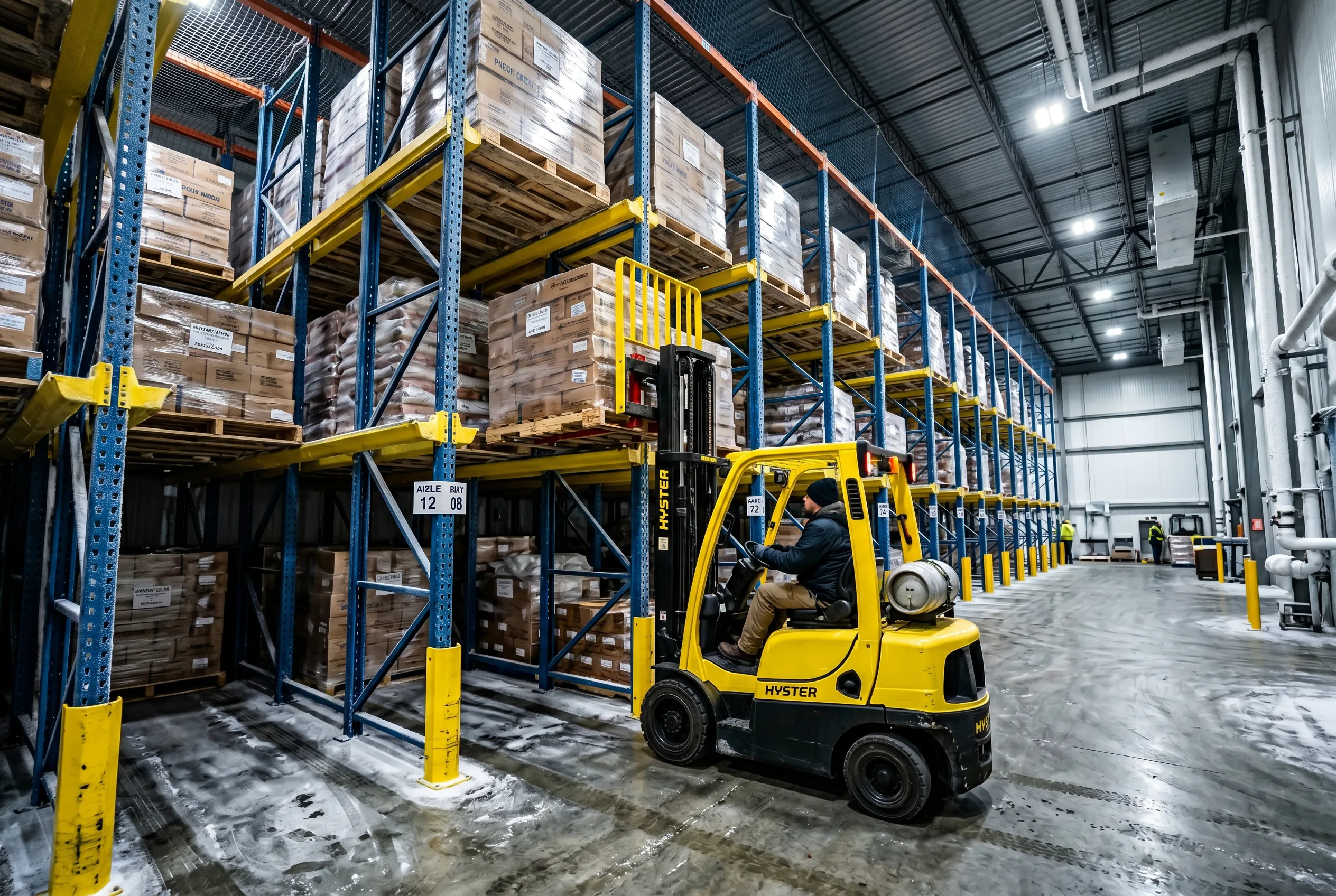
Drive-In Pallet Rack supplied and installed across Delaware. Free, no-obligation quotes.
// Overview
Drive-In Pallet Rack in Delaware
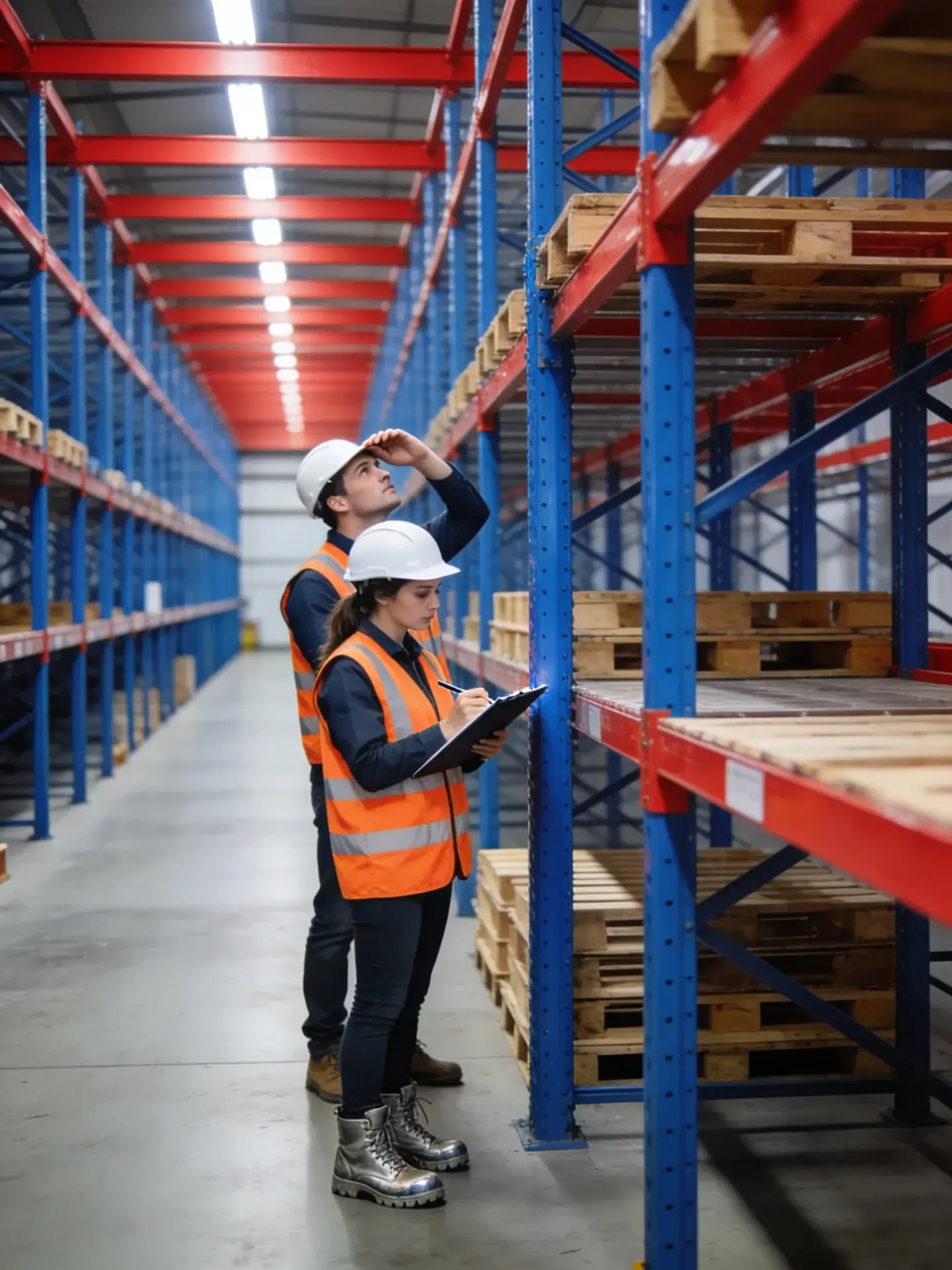
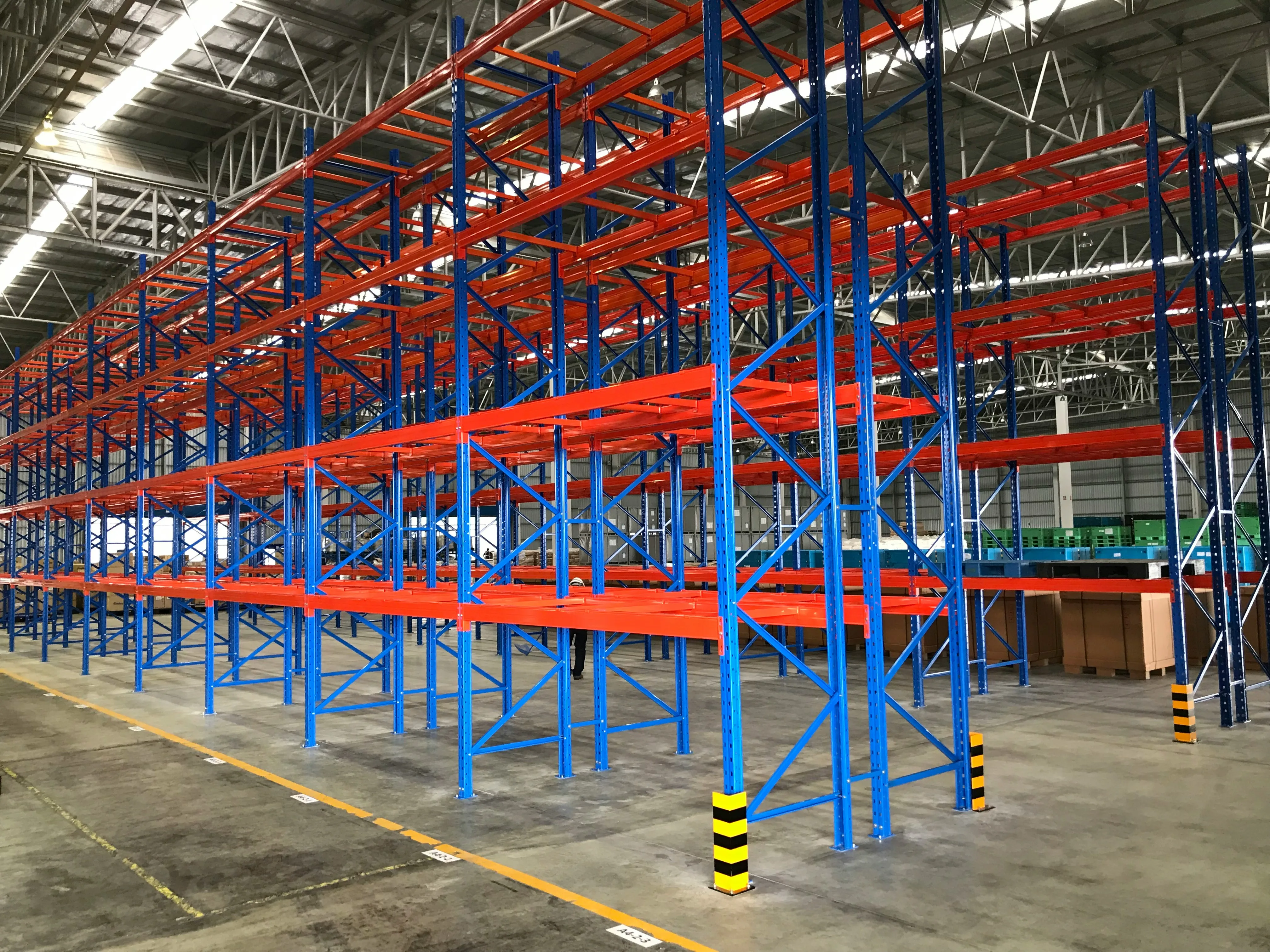
Drive-in pallet rack is the highest-density pallet storage system outside of full automation. The forklift drives into the rack structure between heavy structural columns, traveling on floor-level wheel paths, and places pallets on continuous side rails that run the full depth of the lane. Pallets are stored 2 to 10+ deep, stacked 3 to 5 high, with every cubic foot inside the rack footprint converted to storage. The tradeoff is real — drive-in runs LIFO only, rack-damage exposure is the highest of any rack type because forklifts physically enter the structure, and every bay typically holds a single SKU. But for Delaware operators with homogeneous, bulk, lower-selectivity inventory — especially cold storage freezers and seasonal peak staging — drive-in delivers the lowest capital cost per pallet position of any serious rack system. Delaware Pallet Racking engineers drive-in installs for the Delaware wind load (ASCE 7, 110 mph 3-second gust) and anchors to the Delaware State Building Code (IBC-based) and RMI ANSI MH16.1-2023, with column-protector packages specified on every install to keep rack repair costs controllable over time.
- Lowest capital cost per pallet position of any major rack type
- Maximum cube utilization — critical in cold storage and high-rent markets
- Simple construction — few moving parts, low ongoing maintenance
- Scales with inventory seasonality — great for peak-period bulk storage
// What you get
Product features
- Lane depths from 2 to 10+ pallets, heights typically 3–5 pallets high
- Heavy structural steel columns — all load transfers through uprights
- Continuous side rails running full lane depth (no beams to bow or fail)
- Column-protector packages standard on every Delaware installation
- Drive-through configurations engineered for limited-FIFO operations
- Compatible with reach, narrow-aisle, and sit-down forklift fleets
- Engineered to Delaware State Building Code (IBC-based) and RMI ANSI MH16.1-2023
// Spec sheet
Drive-In Pallet Rack at a glance
// Specifications
Heavy structural uprights
Vertical columns are set on a deep grid — wider than selective rack — and every load is transferred directly to these columns. There are no beams; uprights carry all vertical and lateral loads.
Continuous side rails
Instead of beams spanning front-to-back, drive-in uses horizontal side rails that run the full lane depth along the inside of each column line. Pallets rest on these rails at every level.
Forklift enters the rack
A forklift drives directly into the lane, between column lines, to place or retrieve a pallet. Loading starts at the back of the lane and fills forward; retrieval picks from the front.
// Fit check
Is it right for you?
// Choose it when
- You need maximum density and LIFO rotation is acceptable
- A bay will hold a single SKU (or very few SKUs) at a time
- Cold storage or freezer operations where cube utilization is the dominant cost lever
- Seasonal or peak-period inventory staging where selectivity matters less than capacity
- You already operate reach trucks or narrow-aisle fleet, or will invest to run them
// Consider alternatives when
- You need FIFO — go with pallet flow instead
- SKU count per bay is high — selective is the right call
- Your operation cannot tolerate rack-damage repair cycles — consider pushback
- Your forklift fleet is all counterbalance and you do not want to change that
// Where we install it
Delaware use cases
Cold storage freezer — Port of Wilmington, Wilmington waterfront corridor, New Castle County
Delaware cold chain operators use drive-in for bulk homogeneous SKU freezer storage where every square foot of floor space costs significant refrigeration energy. Drive-in compresses footprint harder than pushback and pays back in utility bills within the first few years.
Tire & rubber distribution — Newark area, New Castle County
Regional distributors for Michelin, Goodyear, and major tire retailers run drive-in for identical-SKU bulk tire storage. A bay holding 40 identical passenger-car tire SKU cases is the textbook drive-in use case.
Paper & pulp — New Castle County, Newark area
Paper roll distribution operations use drive-in for bulk roll stock and corrugated bundles where SKUs are homogeneous and pick frequency per bay is low.
Seasonal retailer DC — Christiana logistics corridor, Middletown Route 301 corridor
Home Depot and Lowe's regional DC operations use drive-in for seasonal SKU peak staging — holiday product, patio furniture in spring, heating equipment in fall — where a SKU is in and out in a defined window and density beats selectivity.
Beverage bulk pre-ship — Wilmington, Christiana
Regional beverage distributor pre-shipment bulk staging uses drive-in in the zones where pallet rotation is controlled by shipping lane rather than FIFO code-date logic — letting the DC extract maximum cube from the footprint.
// Straight answers
Drive-In Pallet Rack questions
01 How is drive-in different from drive-through?
Drive-in has a single aisle where forklifts enter and exit, which forces LIFO rotation. Drive-through has aisles on both ends of every lane, letting forklifts load from one side and pick from the other to achieve limited FIFO. Drive-through costs more (extra aisle space, more columns) but gives rotation flexibility — uncommon but used in some Delaware food and pharma applications.
02 What kind of forklift do I need for drive-in?
Most Delaware drive-in installs run reach trucks or narrow-aisle trucks because the forklift has to maneuver between columns inside the rack. Sit-down counterbalance can work in wider-aisle designs but gives up some density. If your fleet is all counterbalance and you want density without fleet changes, pushback is usually the better choice.
03 Why is rack damage such a concern with drive-in?
Because forklifts physically enter the rack structure, every in-and-out cycle is a potential impact on a column or side rail. A distracted operator clipping an upright can total a column section and bring down pallets. Every serious Delaware drive-in install includes column-protector guards on the full column base, and most operations budget ongoing rack repair as a line item.
04 How does drive-in compare to pushback?
Both are LIFO and both gain density over selective. Drive-in goes deeper (2–10+ vs. 2–6 pallets) and costs less per position, but forklifts enter the rack so damage exposure is higher and you typically need reach or narrow-aisle trucks. Pushback keeps forklifts in the aisle, works with standard counterbalance, but costs more and caps out at about 6 deep. The tradeoff is density and cost vs. damage control and fleet flexibility.
05 What SKU mix makes drive-in the right answer?
Drive-in pays back when a single bay holds a single SKU (or very few SKUs) for extended periods. If you have 20 pallets of one SKU sitting for 2 to 8 weeks before shipping — perfect fit. If every bay needs to hold 3–5 unique SKUs and inventory cycles daily, drive-in is the wrong choice and selective or pushback wins.
06 Can drive-in be used in a freezer?
Yes — and freezers are one of the most common drive-in applications in the Delaware cold-storage corridor (Port of Wilmington, Wilmington waterfront corridor, New Castle County). Drive-in lets the operator compress the refrigerated footprint, which directly cuts energy cost because refrigeration load scales with cubic footage. That density-to-energy math is often what makes drive-in pencil out in cold storage even when pushback would work operationally.
07 How much does drive-in racking cost?
Drive-in rack materials run roughly $60–$80 per pallet position — close to selective — but installation runs heavier (up to 35% of material cost) because of the rail-and-upright structure forklifts drive through. It is usually the cheapest path to high-density storage for few-SKU, high-volume freight. Delaware Pallet Racking quotes drive-in after verifying your pallet and forklift specs.
// More from us
Other rack systems
Pallet Racking & Shelving
Learn More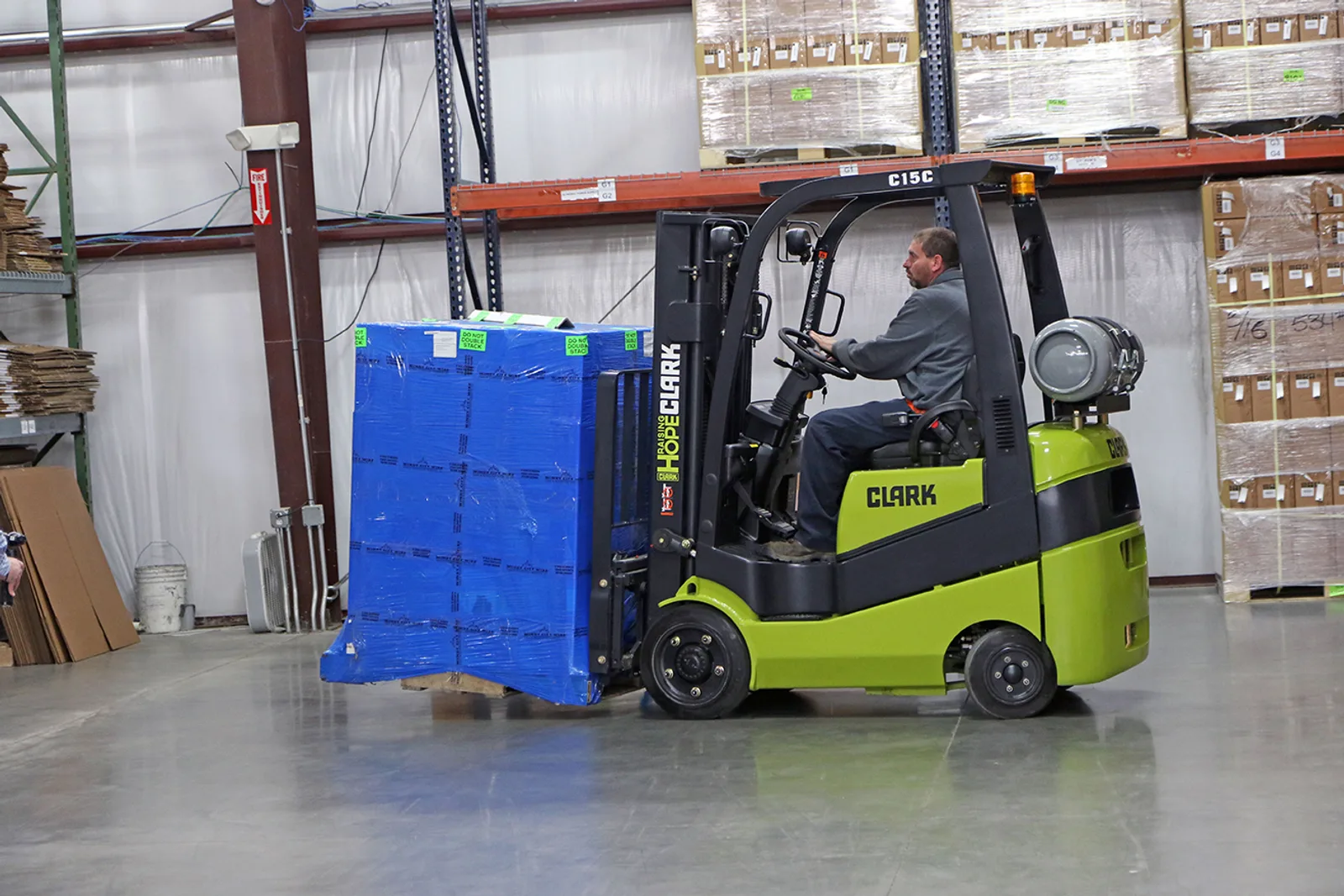
Forklifts — New & Used
Learn More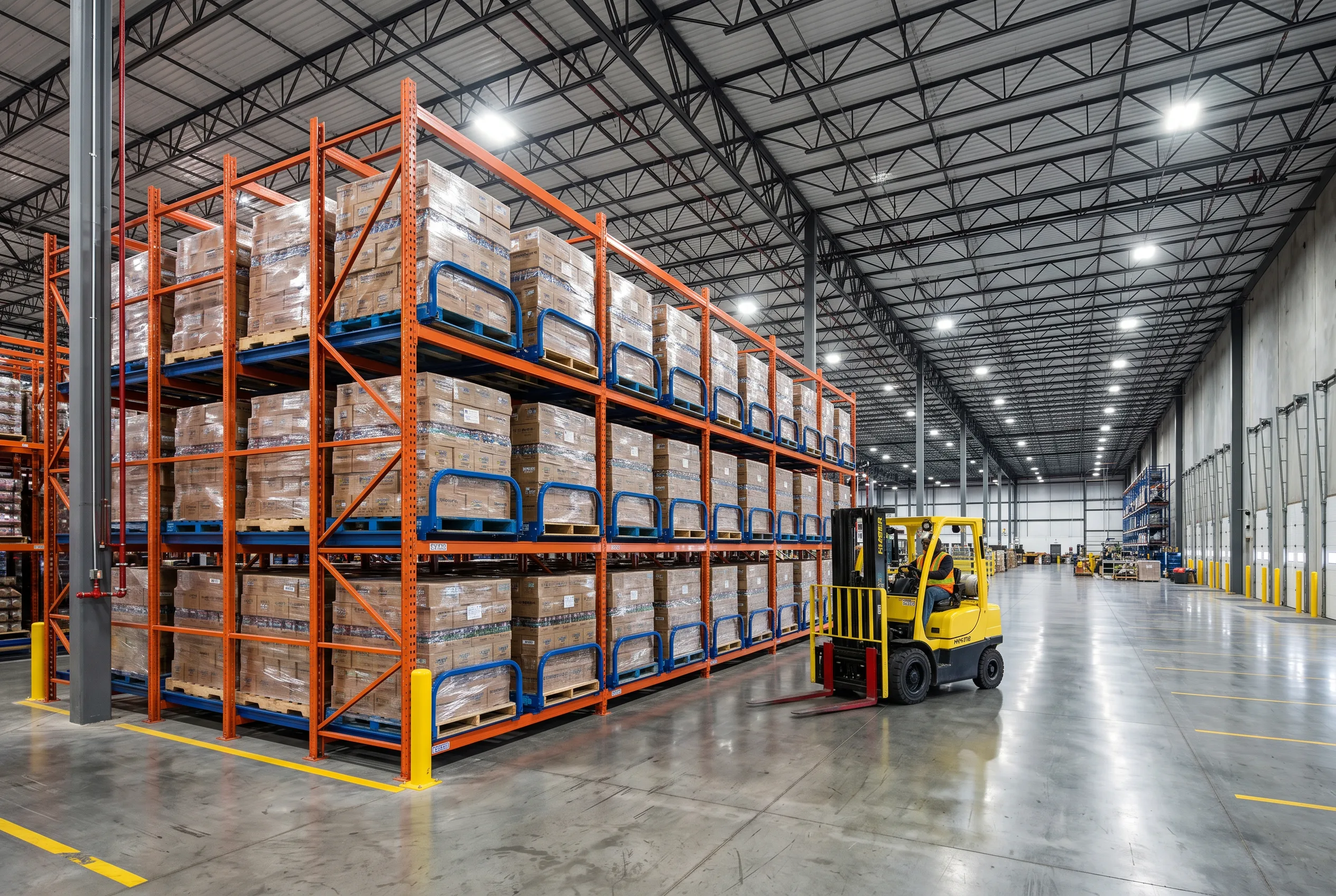
Pushback Rack
Learn More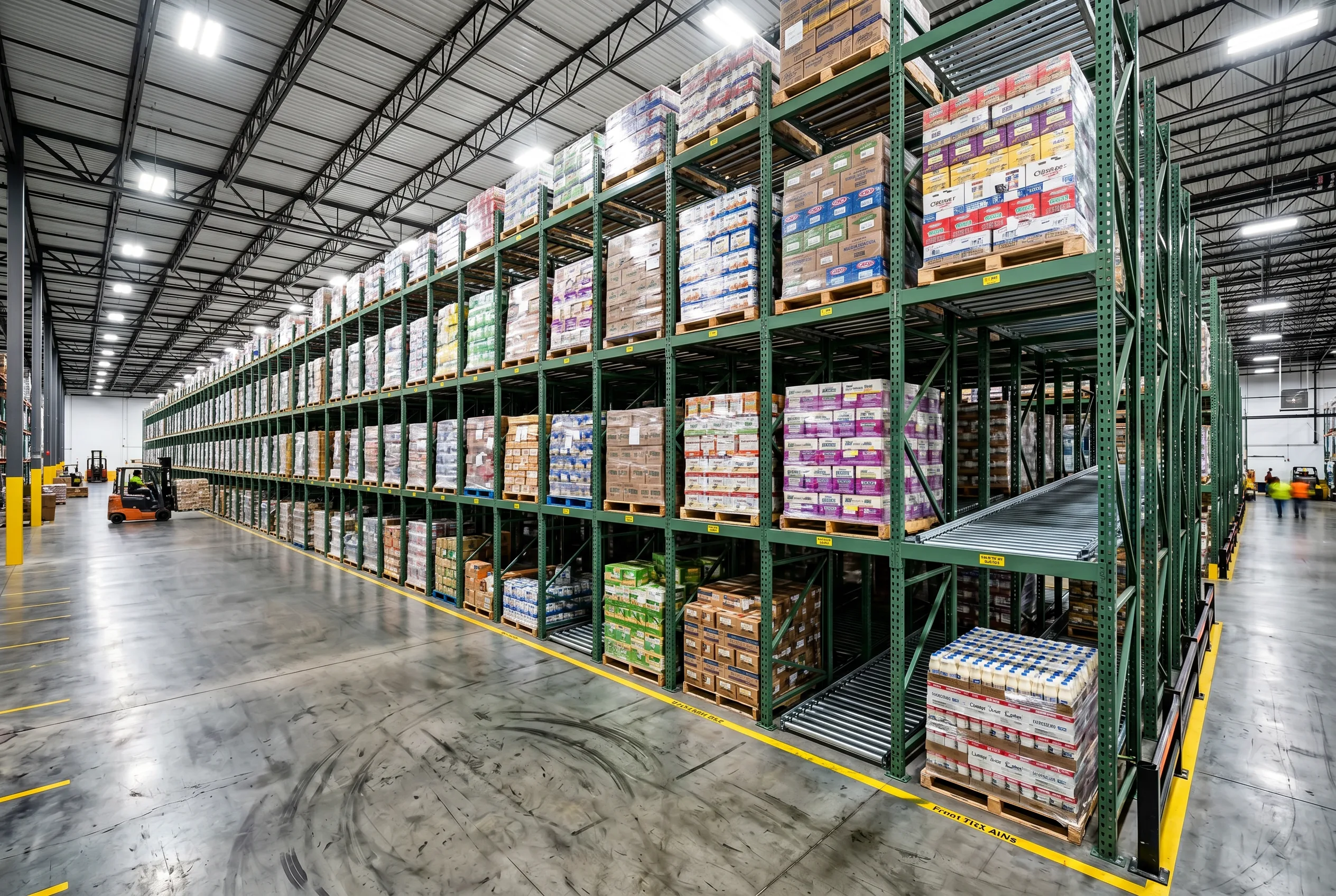
Pallet Flow Rack
Learn More// Where we work
Drive-In Pallet Rack across Delaware
We deliver drive-in pallet rack to warehouses in all three Delaware counties — New Castle, Kent, and Sussex — plus the neighboring Pennsylvania, Maryland, and New Jersey line. Pick your area for local permitting details, typical ceiling heights, and the industries we work with there.
- Wilmington, DE Drive-In Pallet Rack
- Newark, DE Drive-In Pallet Rack
- New Castle, DE Drive-In Pallet Rack
- Dover, DE Drive-In Pallet Rack
- Middletown, DE Drive-In Pallet Rack
- Smyrna, DE Drive-In Pallet Rack
- Claymont, DE Drive-In Pallet Rack
- Bear, DE Drive-In Pallet Rack
- Milford, DE Drive-In Pallet Rack
- Seaford, DE Drive-In Pallet Rack
- Georgetown, DE Drive-In Pallet Rack
- Lewes, DE Drive-In Pallet Rack